
If you’re serious about learning how to reduce ad spend while increasing conversions, the first thing you need to confront is a brutal industry truth: for every $92 the average business spends acquiring customers, only $1 is spent on actually converting them. That staggering imbalance means most companies are pumping budget into a leaky bucket, paying premium prices to drive traffic to systems that simply aren’t built to close. As a small business, you likely can’t afford to operate that way, and the good news is you don’t have to.
Key Takeaways
Question |
Answer |
|---|---|
Can you actually reduce ad spend and still grow? |
Yes. When your conversion systems are properly built, you convert more from the same traffic, meaning you need less paid volume to hit your revenue targets. |
What is the biggest reason ads fail to convert? |
The most common reason is that traffic lands on an under-optimized page or enters a disconnected follow-up system that loses the lead before it can close. |
What role does a growth partner play in cutting ad waste? |
A growth partner audits your entire funnel, not just your ads, and identifies exactly where budget is being lost before recommending any increase in spend. |
Is first-party data important for reducing ad costs? |
Absolutely. Companies that build strong first-party data assets reduce their Customer Acquisition Cost significantly compared to businesses relying on expensive third-party targeting. |
How quickly should you respond to a new lead? |
Within five minutes. Speed-to-lead is one of the most powerful free conversion levers available, and it requires zero additional ad budget to implement. |
What does scaleable growth look like without increasing ad spend? |
Scaleable growth without proportional ad increases comes from optimized systems: faster follow-up, better conversion pages, CRM automation, and smarter audience targeting using owned data. |
Where do small businesses start when fixing their conversion funnel? |
Start with a structured audit of your current digital foundation, lead capture, and follow-up process before touching your ad campaigns. Learn more in our guide on how to scale a small business step by step. |
Why Most Small Businesses Are Burning Their Ad Budget
The problem isn’t the platform. It isn’t your creative, your targeting, or even your budget ceiling. The real problem is structural.
Most small business owners run ads to a website that wasn’t built to convert, a lead form that feeds nowhere, or a follow-up process that’s either manual, slow, or nonexistent. The ad platform delivers the click. Your system drops the ball.
This is where the obsession with ad spend becomes dangerous. Increasing budget into a broken system doesn’t fix the system. It amplifies the leak.
Before any conversation about how to reduce ad spend while increasing conversions can happen, you have to be honest about what your funnel actually looks like from the moment someone clicks your ad to the moment they become a paying customer.
Is your landing page built to convert or just to inform?
Does your lead capture go directly into an automated follow-up sequence?
How fast does your team (or your system) respond to a new inquiry?
Are you measuring conversion rate at every stage, or only tracking clicks and impressions?
If you can’t answer these questions with confidence, you’re not ready to scale your ad spend. You’re ready to fix your foundation.
How to Reduce Ad Spend While Increasing Conversions: Fix the Foundation First
The single most effective way to reduce ad spend while increasing conversions is to build a system that gets more out of the traffic you’re already paying for.
Think about it this way: if your current conversion rate on paid traffic is 2%, and you can engineer it to 4%, you’ve effectively doubled your revenue without spending a single extra dollar on ads.
This is the foundation-first approach that we build into every engagement through the Phoenix Ascent Framework. It’s a structured progression that starts with your digital presence and builds outward, ensuring every dollar you eventually invest in ads is landing on a platform designed to actually close.
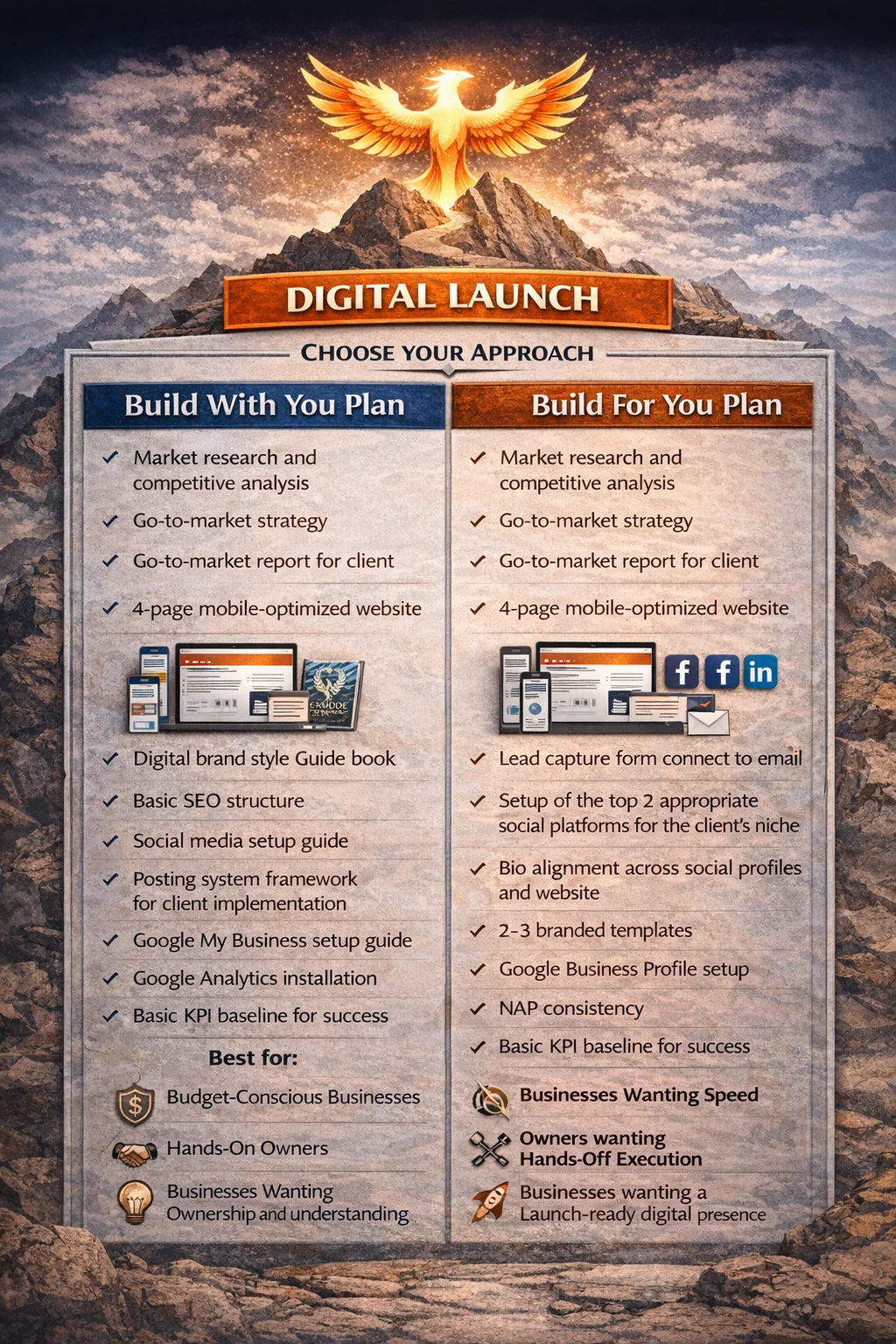
Stage 1 of the framework, Digital Launch, is specifically designed for businesses ready to move from idea to presence without confusion, delays, or wasted effort. It delivers a structured starting point with built-in lead capture and conversion infrastructure, priced at $1,500 for a collaborative “Build WITH You” approach or $2,500 to $3,000 for a fully managed “Build For You” execution.
This is not about cosmetics. It’s about ensuring that when your ads drive traffic, something productive happens with it.
Build Connected Systems Before You Increase Ad Spend
One of the most overlooked factors in how to reduce ad spend while increasing conversions is system connectivity. Most businesses operate in silos: the website doesn’t talk to the CRM, the CRM doesn’t trigger follow-up automation, and the sales team never gets a real-time notification when a qualified lead comes in.
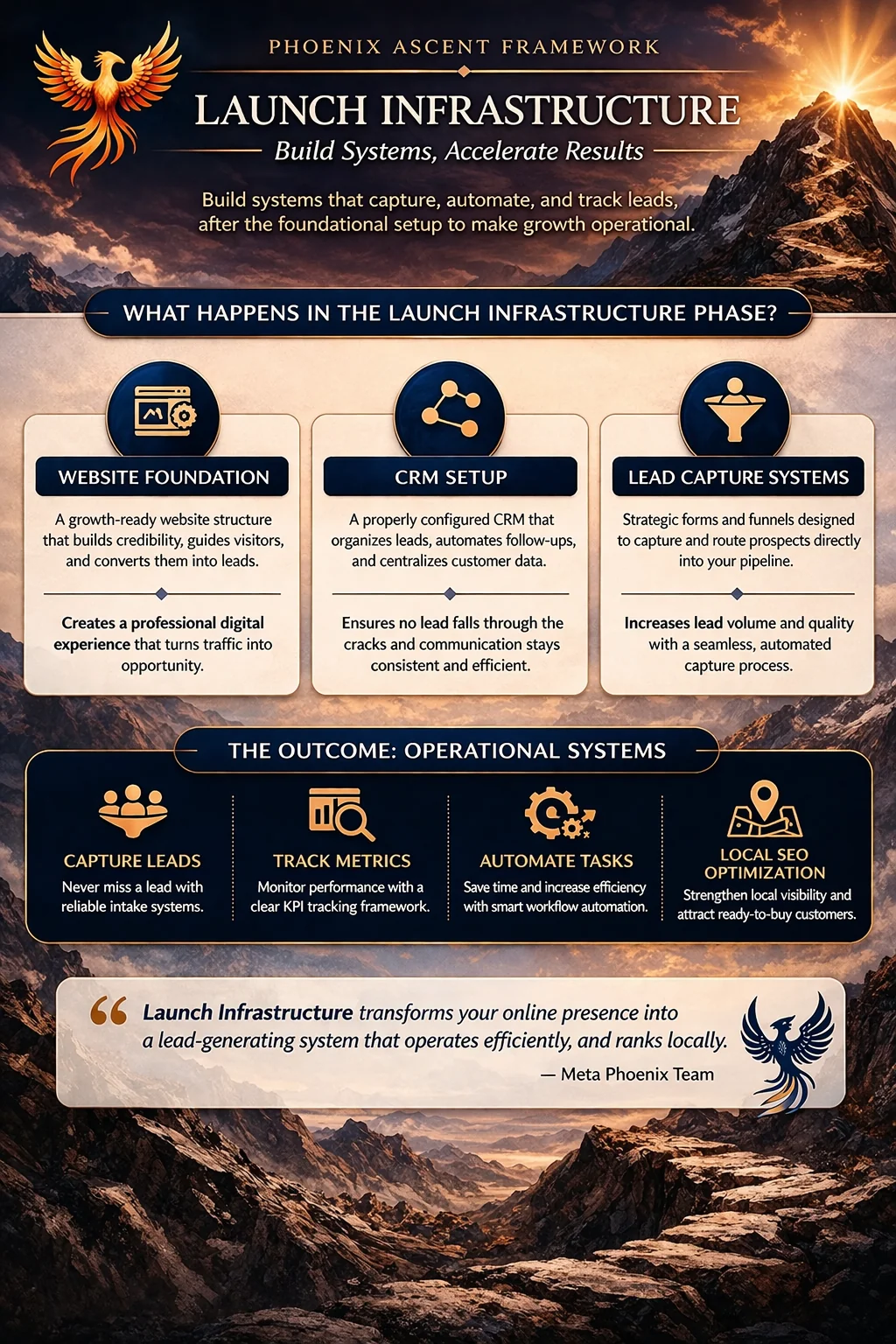
Stage 2 of the Phoenix Ascent Framework, Launch Infrastructure, addresses this directly. It connects your website, leads, and operations into a structured system that actually functions. The investment for Launch Infrastructure ranges from $3,500 to $8,000, depending on the complexity of your business.
The key deliverables here include CRM setup and automation foundation, conversion-ready website structure, and the systematic lead management that turns clicks into qualified opportunities. This is the infrastructure layer that makes ad spend rational.
Without it, every campaign you run is essentially a transfer of money from your account to the ad platform with minimal returns. With it, the same budget starts compounding.
Did You Know?
Responding to a lead within 5 minutes makes you 21 times more likely to qualify them compared to waiting just 30 minutes.
Source: lek.com
That stat reframes the entire conversation. Speed-to-lead is a free conversion lever. Every business that pays to run ads but takes hours or days to follow up is converting at a fraction of what they could. Fixing this alone, through CRM automation and structured lead routing, can dramatically lower the effective cost-per-acquisition without touching your ad budget at all.
How a Growth Partner Helps You Reduce Ad Spend While Increasing Conversions
There’s a specific difference between a vendor and a growth partner. A vendor executes what you ask for. A growth partner audits what you have, identifies what’s actually holding you back, and builds a plan that serves your revenue goals rather than just your requests.

When it comes to reducing ad spend while increasing conversions, the growth partner model is the most efficient path forward. Rather than running ads in isolation, a true growth partner looks at your entire funnel, from the first click to the closed deal, and optimizes every stage.
At Meta Phoenix, Stage 4 of the Phoenix Ascent Framework is literally called Growth Partner. It’s an ongoing engagement at $2,000 per month, designed for businesses that have moved beyond setup and are ready for strategic expansion, continuous optimization, and sustained growth.
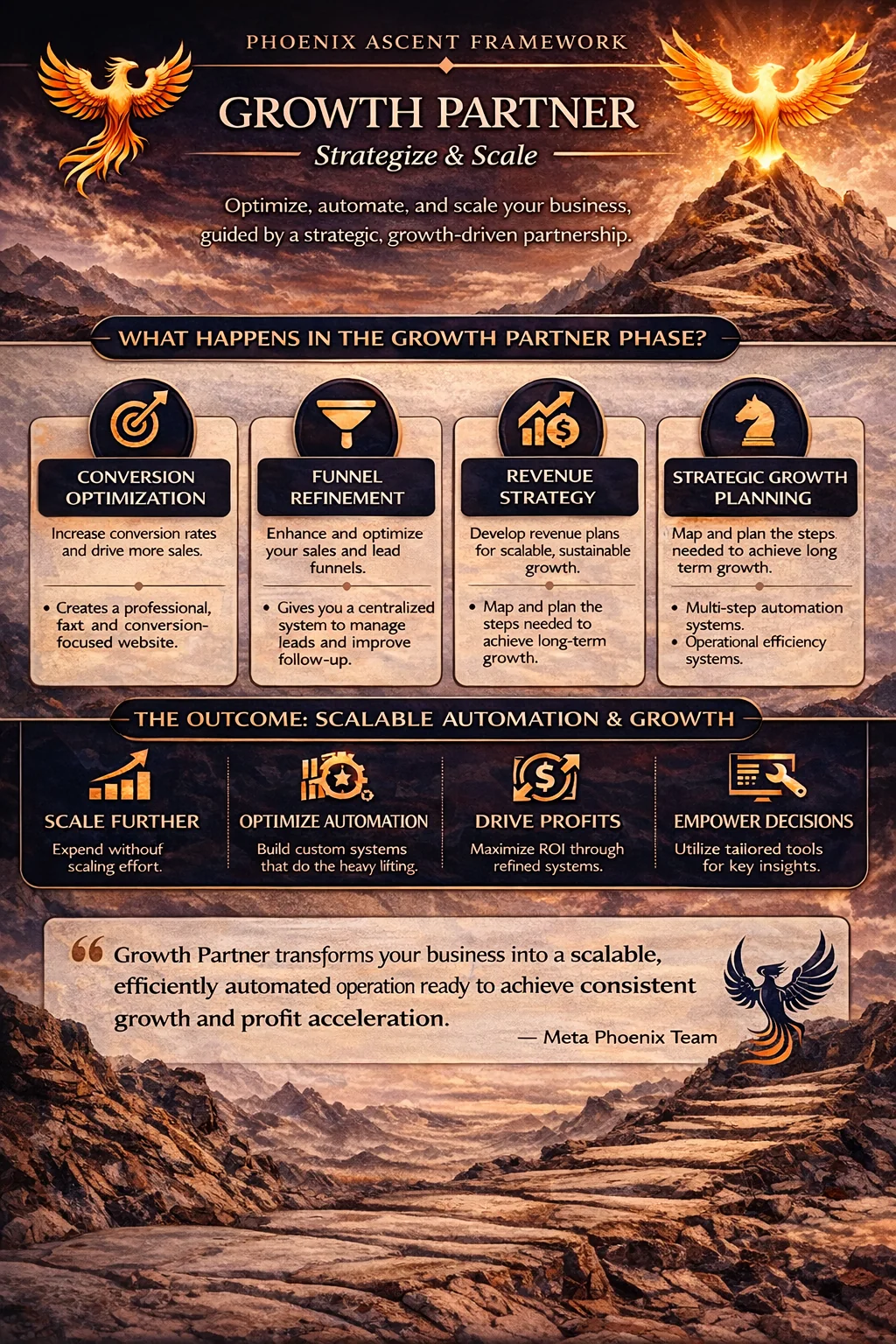
This is not a project. It’s a partnership. And that distinction matters enormously when you’re trying to make smarter decisions about where every marketing dollar goes.
If you want a deeper understanding of what a true growth partnership looks like in practice, our article on what a growth partner actually is breaks it down in full detail.
Scaleable Growth Requires Smarter Targeting, Not More Spend
One of the fastest ways to reduce wasted ad spend is to get smarter about who you’re targeting, not just how much you’re spending to reach them.
Broad targeting drives impressions. Precise targeting drives revenue. The businesses that achieve scaleable growth without proportional budget increases are the ones investing in data infrastructure alongside their paid campaigns.
This means building audience segments based on actual customer behavior, using CRM data to create lookalike audiences, excluding low-quality traffic patterns from your campaigns, and retargeting with offers that match exactly where someone is in your funnel.
None of this requires a larger budget. It requires better data and the systems to use it effectively. That’s a structural problem, not an ad platform problem.
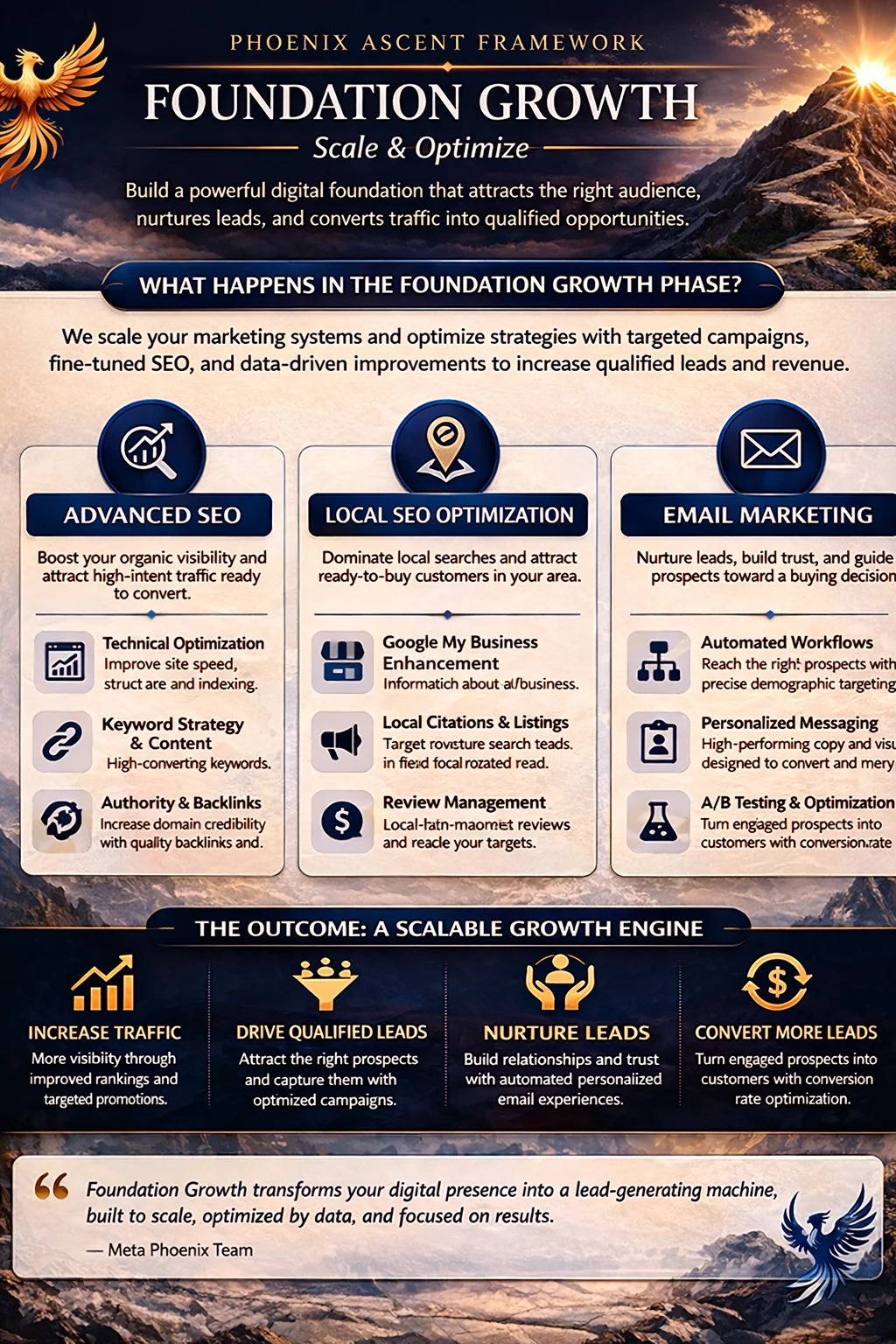
Smarter targeting is one of the pillars of the Foundation Growth stage of the Phoenix Ascent Framework, where we move businesses from setup into consistent, measurable performance through ongoing KPI refinement and CRM optimization.
How to Reduce Ad Spend While Increasing Conversions with First-Party Data
Privacy regulations in 2026 have reshaped the advertising landscape significantly. Third-party cookie targeting has become increasingly unreliable and expensive, and businesses that haven’t built their own data assets are paying a premium for access to audiences they don’t own.
Did You Know?
Companies with mature first-party data ecosystems report a 34% lower average Customer Acquisition Cost than peers relying on third-party cookies.
Source: genesysgrowth.com
A 34% reduction in Customer Acquisition Cost is not a rounding error. For a small business spending $5,000 per month on ads, that’s $1,700 back in your budget every single month, without reducing a single impression.
Building first-party data means capturing email addresses, phone numbers, behavioral data, and purchase signals through your own platforms, and then using that data to drive targeting decisions on ad platforms. It’s a long-term asset that compounds over time.
This is exactly why infrastructure comes before ad scaling in the Phoenix Ascent Framework. You need the systems in place to capture and use this data before you can benefit from it.
Scaleable Growth Through Conversion Rate Optimization
Conversion Rate Optimization (CRO) is the practice of systematically improving how well your existing traffic converts into leads and customers. It’s one of the most direct answers to how to reduce ad spend while increasing conversions because it doesn’t require any additional traffic to show results.
Consider these specific, actionable CRO moves that work in 2026:
Personalized CTAs: Research confirms that personalized calls-to-action convert 202% better than generic buttons. Tailoring your offer to where a visitor is in your funnel is no longer optional for competitive businesses.
Page speed optimization: A single one-second delay in mobile page load time can reduce conversions by up to 7%. Every dollar spent on paid mobile traffic is partially wasted if your page is slow.
Interactive content: Quizzes, calculators, and assessments generate twice the conversions of static content by keeping users engaged and collecting intent data simultaneously.
Clear, single-action landing pages: Ad traffic should land on a page with one clear goal. Every additional option you give a visitor reduces the probability they take the action you want.
Social proof above the fold: Results, testimonials, and case studies placed within the first visible section of a page significantly reduce bounce rates from paid traffic.
For scaleable growth, CRO isn’t a one-time fix. It’s an ongoing process of testing, measuring, and refining. That’s precisely what makes a long-term growth partnership so valuable over a single-project approach.
The Phoenix Ascent Framework: A Structured Approach to Reducing Ad Waste

The Phoenix Ascent Framework is our structured progression for small business growth. It’s not a list of services. It’s a deliberate sequence that ensures every investment in marketing is built on a solid foundation.
Here’s how the four stages map directly to reducing ad spend while increasing conversions:
Stage |
Focus |
Impact on Conversions |
|---|---|---|
Stage 1: Digital Launch |
Online presence and lead capture foundation |
Ensures ad traffic lands on a professional, converting destination |
Stage 2: Launch Infrastructure |
CRM, automation, and systems connectivity |
Ensures no lead is lost, follow-up is instant, and data flows properly |
Stage 3: Foundation Growth |
Consistent performance, KPI tracking, and refinement |
Builds the data intelligence needed to optimize ad targeting and reduce waste |
Stage 4: Growth Partner |
Strategic expansion and ongoing optimization |
Applies accumulated data and strategy to scale efficiently with disciplined ad spend |
The framework is designed this way intentionally. Businesses that skip stages and jump straight to ad scaling almost always end up back at square one, having burned budget without building anything lasting.
If you’re unsure which stage applies to your current situation, our growth path assessment walks you through the exact starting point for your business.
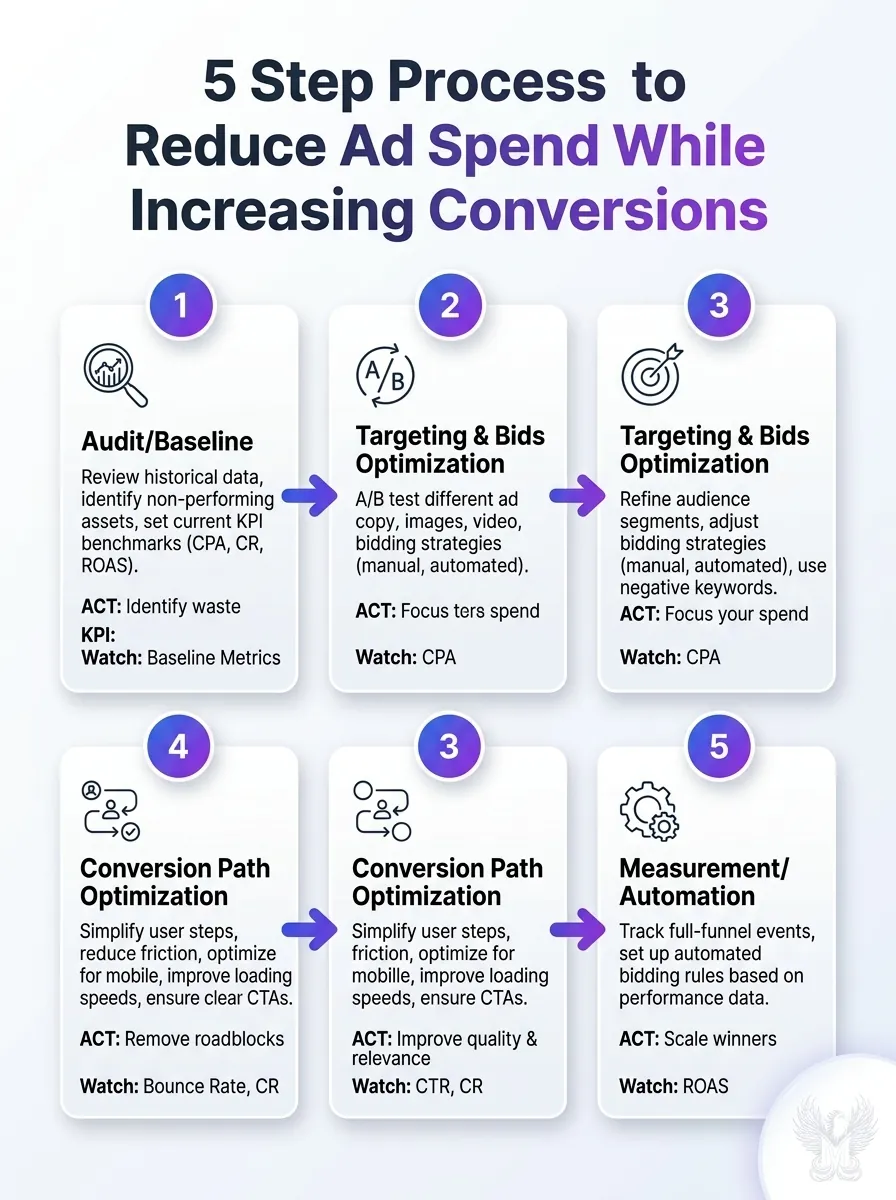
A practical 5-step framework to reduce ad spend while boosting conversions. Implement these steps to optimize campaigns and improve ROI.
How to Reduce Ad Spend While Increasing Conversions: The Role of Retention
One of the most underused strategies for improving conversion efficiency is focusing on customers you’ve already won. Research consistently shows that increasing customer retention by just 5% can boost total company profits by 25% to 95%.
Retention strategies directly reduce the pressure on your acquisition budget. When your existing customers buy again, refer others, and engage with your brand consistently, you need less paid traffic to maintain or grow your revenue baseline.
This means your ad campaigns can focus on genuine expansion rather than replacing churned customers. It also means your Customer Lifetime Value increases, which changes the math on what an acceptable Cost Per Acquisition actually is.
For a small business operating on tight margins, this shift in perspective can be genuinely transformative. Our guide on how to scale a small business step by step covers this retention-first growth mindset in detail.
What to Do Before Your Next Ad Campaign Launches
Before you add another dollar to your ad budget, run through this pre-launch checklist. This is the exact approach we take in our detailed consultation process before recommending any paid media strategy for a client.
Audit your landing page. Is it specifically designed to convert the audience the ad is targeting? Does it have one clear call-to-action? Is it fast on mobile?
Verify your lead capture is automated. When someone fills out your form or calls your tracking number, where does that data go? Is it triggering an automated response within seconds?
Check your speed-to-lead process. Who is responsible for following up with new leads, and what is the maximum acceptable response time? If the answer is “whenever someone gets to it,” you have a conversion problem, not an ad problem.
Review your audience segmentation. Are you showing ads to people who are most likely to convert based on behavioral and demographic data, or are you using broad targeting because it’s easier to set up?
Establish your baseline conversion rate. You cannot optimize what you don’t measure. Know your current lead-to-close rate before you run another campaign, so you have something to improve against.
We don’t just tell you to do these things. We roll up our sleeves, conduct the comprehensive audit, analyze the data, and implement the changes alongside you. That’s what separates a real growth partner from a consultant handing you a slide deck and walking away.
“Most businesses don’t struggle because of lack of effort. They struggle because there’s no clear starting point.” — Phoenix Ascent Framework
If you’re ready to get a clear picture of where your business stands and what it actually needs, schedule a growth assessment. You’ll leave with clarity on your next move, whether we work together or not.
Conclusion: How to Reduce Ad Spend While Increasing Conversions Starts with Structure
The businesses that figure out how to reduce ad spend while increasing conversions in 2026 share one thing in common: they stop treating ads as the answer and start treating systems as the foundation.
Better conversion rates start with a better website, faster lead response, smarter CRM automation, and first-party data that powers precision targeting. These are structural wins, not budget increases, and they compound over time.
A true growth partner works across every stage of your funnel, not just your ad account. The Phoenix Ascent Framework is specifically designed to build your business in the right sequence so that every marketing dollar you spend eventually lands on infrastructure that earns it back.
Whether you’re a single-member LLC just getting started or a business ready for serious scaleable growth, the path forward isn’t more spend. It’s smarter structure. We’d love to help you build it.
View transparent pricing for every stage of the Phoenix Ascent Framework or book your growth assessment today.
Frequently Asked Questions
Yes, and it’s more common than most business owners realize. When you fix conversion rate issues at the landing page, follow-up, and CRM level, you extract more revenue from the same traffic volume. This reduces the effective cost per acquisition without cutting any campaigns.
The single fastest win is improving your speed-to-lead. Responding to a new inquiry within five minutes makes you 21 times more likely to qualify that lead compared to waiting just 30 minutes. This requires no additional ad budget and often no additional staff, just proper automation.
If your click-through rates are healthy but your lead volume is low, the problem is almost certainly on your landing page or in your offer structure. A proper funnel audit that tracks the visitor journey from click to close will reveal exactly where the drop-off is happening.
A growth partner works across your entire business system, not just your ad campaigns. They audit your infrastructure, identify conversion gaps, and implement solutions rather than simply recommending them. The goal is revenue growth, not just marketing activity.
Structural improvements like CRM automation and landing page optimization often show measurable results within 30 to 60 days. Longer-term improvements like first-party data accumulation and audience refinement typically compound over a 90-day period and beyond.
It’s actually more critical for a small business than any other size. With limited budget, every dollar has to work harder, which means fixing your conversion infrastructure first is not optional. Businesses that scale ads before fixing their funnel consistently waste the majority of their investment.
The Phoenix Ascent Framework is a four-stage growth methodology that builds your digital presence, connected systems, and performance infrastructure before scaling ad spend. By the time paid media investment increases, every element of your funnel is designed to convert efficiently, reducing cost-per-acquisition and improving overall marketing ROI.